
Artificial Intelligence
Exploring how Artificial Intelligence and Machine Learning are revolutionizing our world.
Embracing the AI Revolution: A Practical Introduction to Artificial Intelligence for Clients and Businesses (2026 Edition)
Artificial intelligence (AI) is no longer a futuristic concept confined to science fiction or research labs. By 2026, it has become an integral part of daily life and business operations worldwide. From the voice assistants on your smartphone to sophisticated systems powering personalized recommendations, fraud detection, and even creative content generation, AI is quietly transforming how we live, work, and interact.
This comprehensive guide introduces AI—what it is, its core technologies, the different types of AI products and services available today, and practical ways it can enhance everyday life and business. Written specifically for clients seeking to understand these technologies, it highlights opportunities for integration while addressing benefits, challenges, and ethical considerations. Our goal is to demystify AI so you can confidently explore how our consultancy, testing, and specialized review services (including our “Second Eyes” offering) can help you adopt these tools safely, effectively, and strategically.Whether you are an individual looking to optimize personal routines or a business leader aiming to drive efficiency and innovation, this article provides actionable insights. AI adoption is accelerating rapidly, and those who understand and implement it thoughtfully will gain significant advantages.
What Is Artificial Intelligence?
At its core, artificial intelligence refers to the capability of computational systems to perform tasks typically associated with human intelligence. These include learning from experience, reasoning, problem-solving, perceiving the environment (through vision, speech, or other sensors), understanding language, making decisions, and even demonstrating creativity or autonomy.
Unlike traditional software that follows explicit, rule-based instructions programmed by humans, AI systems—particularly those powered by machine learning—can improve their performance over time by analyzing data, identifying patterns, and adapting without being explicitly reprogrammed for every scenario.
A Brief History
The conceptual roots of AI stretch back centuries, with ideas of mechanical beings appearing in ancient myths and early automata. Modern AI as a field emerged in the mid-20th century:
- In 1950, Alan Turing proposed the “Imitation Game” (now known as the Turing Test) to evaluate whether a machine could exhibit intelligent behavior indistinguishable from a human.
- The term “artificial intelligence” was coined in 1956 at the Dartmouth Conference by John McCarthy and colleagues, marking the formal birth of the discipline.
- Early optimism led to rapid progress in areas like game-playing programs and symbolic reasoning, but challenges with computational power and data led to “AI winters” (periods of reduced funding and interest) in the 1970s and late 1980s/early 1990s.
- The resurgence began in the 2010s with advances in computing (especially GPUs), big data, and deep learning techniques. Neural networks, inspired by the human brain, proved highly effective.
- The 2020s brought an explosive “AI boom,” fueled by transformer architectures (introduced in 2017) and generative AI models capable of creating text, images, code, and more. By 2026, AI is embedded across industries, with ongoing advancements in multimodal systems (handling text, images, audio, and video together) and AI agents.
How AI Works: Core Concepts
Today’s AI excels at narrow, well-defined tasks but continues to evolve toward broader capabilities. Most modern AI relies on machine learning (ML), a subset of AI where systems learn patterns from data rather than following hardcoded rules.
Key subfields include:
- Supervised learning: The system is trained on labeled data (e.g., images tagged as “cat” or “dog”) to make predictions on new data.
- Unsupervised learning: The system finds hidden patterns in unlabeled data (e.g., customer segmentation).
- Reinforcement learning: The system learns through trial and error, receiving rewards or penalties (e.g., training robots or game-playing AIs).
Deep Learning
Deep learning, a powerful subset of ML, uses multi-layered artificial neural networks to process complex data like images, speech, and text. These networks mimic the structure of the human brain, with interconnected “neurons” that adjust weights during training to improve accuracy.
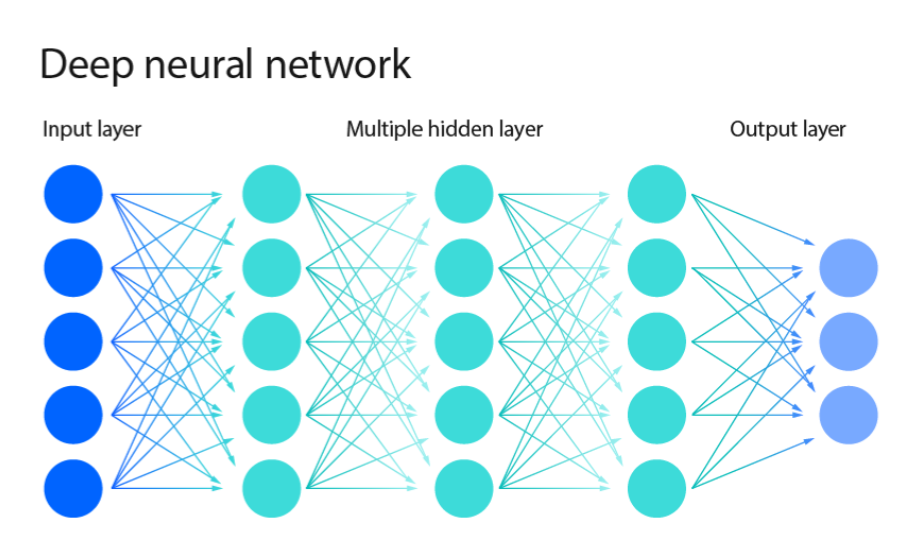
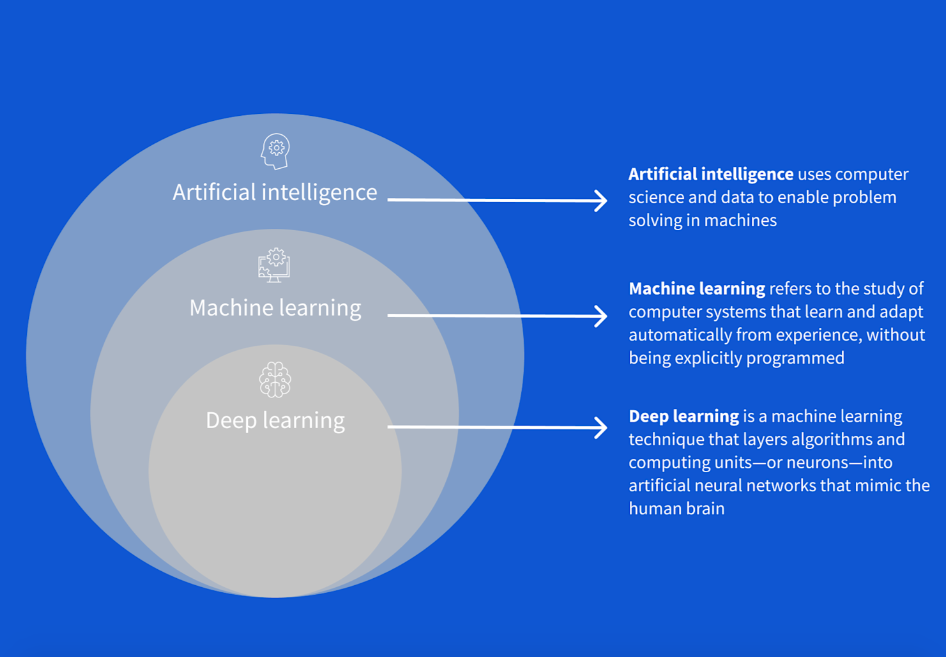
Relationship between AI, Machine Learning, and Deep Learning—nested concepts where deep learning powers many advanced AI applications today.Data is the fuel for AI. High-quality, diverse datasets enable better learning. Training involves feeding data through the model, adjusting parameters via algorithms (like backpropagation), and validating performance.
Once trained, models can be deployed for inference—making predictions or generating outputs on new inputs.
Challenges include the need for massive computational resources, potential biases in training data, and the “black box” nature of some deep learning models, where decision-making processes can be difficult to interpret.
Types of AI: From Today’s Reality to Future Horizons
AI is often categorized in two main ways: by capability (what it can do) and by functionality (how it processes information).
By Capability
These are the most widely discussed categories as of 2026:
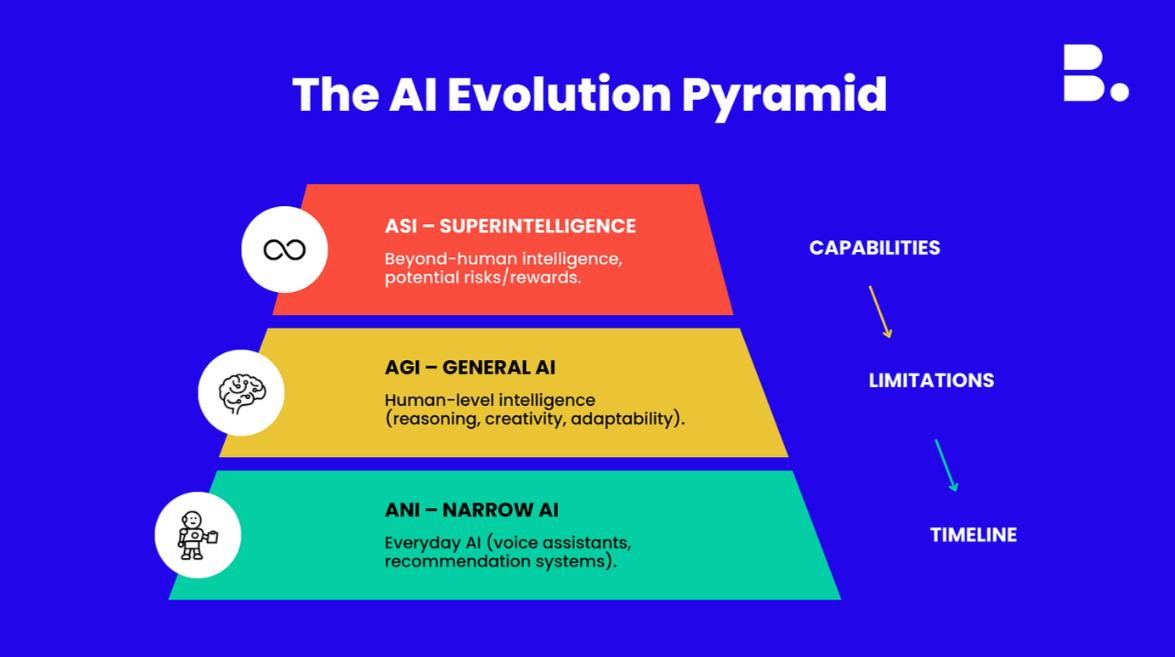
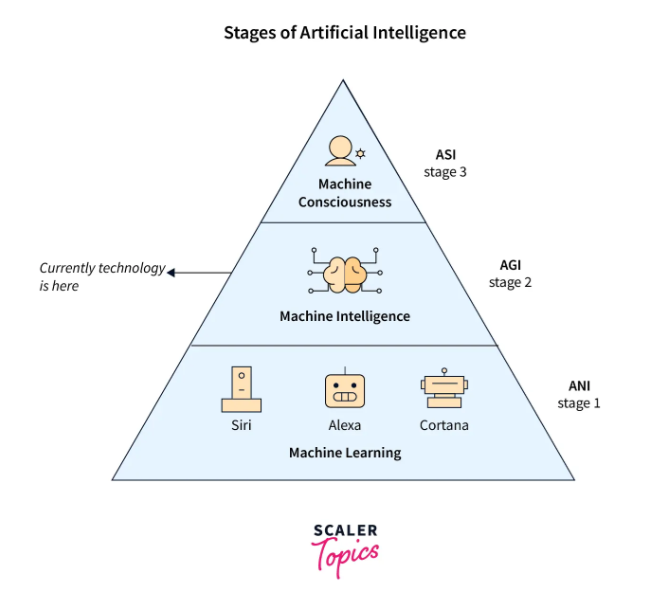
- Artificial Narrow Intelligence (ANI) or Weak AI — This is the only type of AI that currently exists in widespread, practical use. ANI is specialized for specific tasks and performs them exceptionally well—often better than humans in narrow domains—but lacks general understanding or adaptability outside its training. Examples include voice assistants (Siri, Alexa), recommendation engines (Netflix, Amazon), image recognition systems, chess-playing programs, and large language models like ChatGPT or Grok for text generation.
- Artificial General Intelligence (AGI) or Strong AI — Hypothetical AI with human-level intelligence across a wide range of tasks. An AGI could learn, reason, plan, and adapt flexibly like a human, transferring knowledge between domains without task-specific retraining. As of 2026, AGI remains theoretical; no system has achieved true general intelligence, though progress toward more capable, agent-like systems continues.
- Artificial Superintelligence (ASI) — A theoretical future stage where AI surpasses human intelligence in virtually every aspect, including creativity, scientific discovery, and social skills. ASI could lead to unprecedented advancements—or significant risks if not aligned with human values. This remains speculative and is the subject of ongoing research into AI safety and alignment.
By Functionality
- Reactive Machines: No memory or learning from past experiences; they react purely to current inputs (e.g., IBM’s Deep Blue chess computer).
- Limited Memory: Most modern AI falls here. Systems learn from historical data to make better decisions (e.g., self-driving cars using past driving data).
- Theory of Mind: Emerging capabilities in advanced models to understand emotions, beliefs, and social contexts (still developing).
- Self-Aware AI: Fully conscious systems with self-understanding—purely theoretical at present.
Understanding these distinctions helps set realistic expectations. Today’s powerful tools are overwhelmingly ANI, delivering tremendous value in focused applications while researchers work toward broader capabilities.
Key AI Technologies, Products, and Services
AI manifests through various interconnected technologies and commercial offerings:
- Machine Learning & Deep Learning Platforms: Frameworks like TensorFlow, PyTorch, and cloud services from AWS, Google Cloud, and Microsoft Azure enable building custom models.
- Natural Language Processing (NLP) and Large Language Models (LLMs): Power chatbots, virtual assistants, translation, summarization, and content generation. Products include ChatGPT, Claude, Grok, and enterprise versions integrated into tools like Microsoft Copilot.
- Computer Vision: Enables machines to “see” and interpret images/videos. Used in facial recognition, medical imaging, quality control, and autonomous vehicles. Services from companies like Google Vision AI or specialized computer vision platforms.
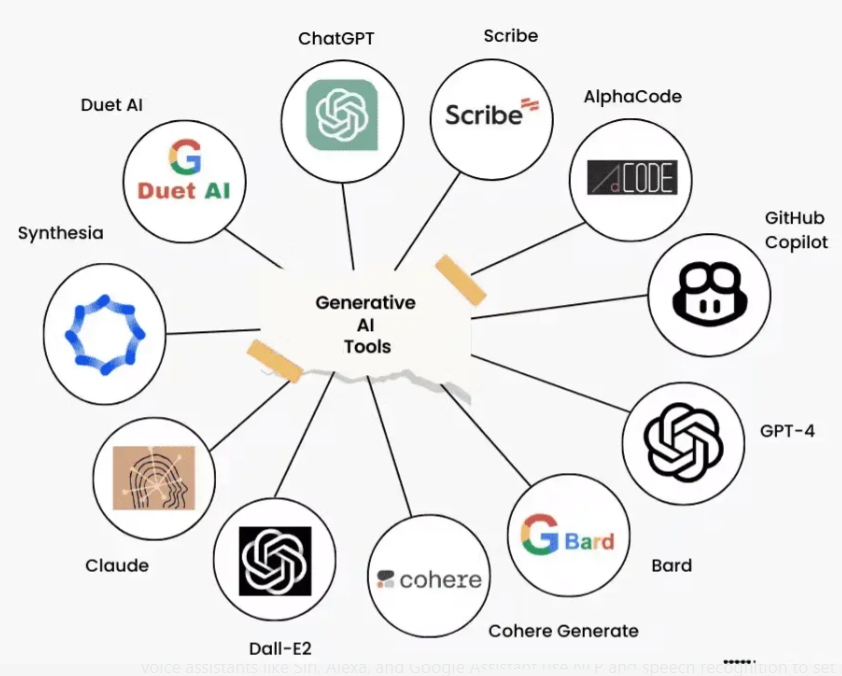
- Generative AI: Creates new content. Text generators, image creators (DALL-E, Midjourney, Stable Diffusion), video tools, code assistants (GitHub Copilot), and music generators. Multimodal models combine inputs/outputs across text, image, audio, etc
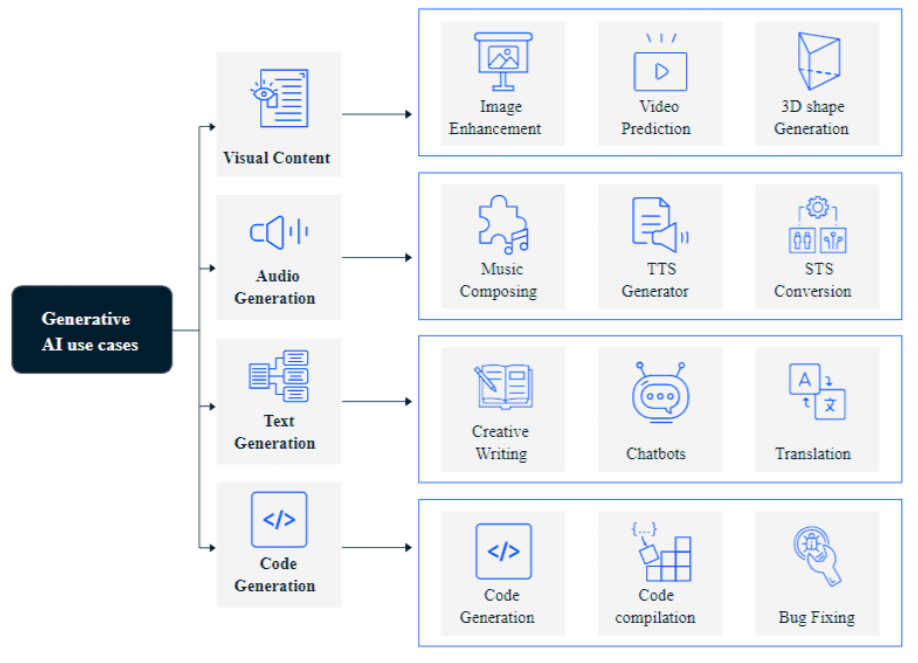
Generative AI use cases flowchart covering visual content, audio, text, and code generation with specific applications like image enhancement, music composing, creative writing, and code fixing.
- Predictive Analytics & Recommendation Systems: Analyze data to forecast trends, detect anomalies (e.g., fraud), or suggest products/content.
- Robotics & Automation: AI-powered robots for manufacturing, logistics, healthcare assistance, and more.
- AI Agents and Automation Tools: Autonomous systems that plan and execute multi-step tasks (gaining traction in 2025–2026).
- Specialized Services: AI consulting, custom development, MLOps (machine learning operations for deploying and maintaining models), and ethical AI auditing.
Commercial products range from consumer apps (free or low-cost) to enterprise platforms requiring significant investment but offering scalability and integration.
AI in Everyday Life: Practical Examples
AI is already enhancing personal experiences in subtle yet powerful ways. Here are key areas:
Voice assistants like Siri, Alexa, and Google Assistant use NLP and speech recognition to set reminders, answer questions, control smart home devices, and more. They learn your preferences over time.
Smartphones and Daily Interactions
- Facial recognition and biometric security (Face ID).
- Predictive text, autocorrect, and smart replies in messaging/email apps.
- Personalized news feeds and social media content curation.
- Camera features: Scene detection, portrait mode, object recognition, and generative editing tools.
Navigation and Transportation
Google Maps and similar apps use AI for real-time traffic prediction, optimal routing, and estimated arrival times. Ride-sharing services optimize matching and pricing dynamically.Entertainment and Media
- Streaming platforms (Netflix, Spotify, YouTube) deliver highly personalized recommendations based on viewing/listening history and similar users.
- Content moderation and search ranking on social platforms.
Health and Wellness
Fitness trackers and apps analyze activity data for personalized insights and coaching. Symptom checkers and early diagnostic aids support (but do not replace) medical professionals. Wearables monitor vital signs with anomaly detection.Finance and Shopping
- Fraud detection in banking apps flags suspicious transactions in real time.
- Budgeting tools categorize spending and suggest savings.
- E-commerce sites provide product recommendations and dynamic pricing.
- Virtual try-on tools (e.g., makeup or clothing) powered by computer vision.
Smart Homes
Thermostats (like Nest) learn your schedule to optimize energy use. Lighting, security cameras, and appliances integrate via AI for automation and anomaly detection (e.g., unusual activity alerts).
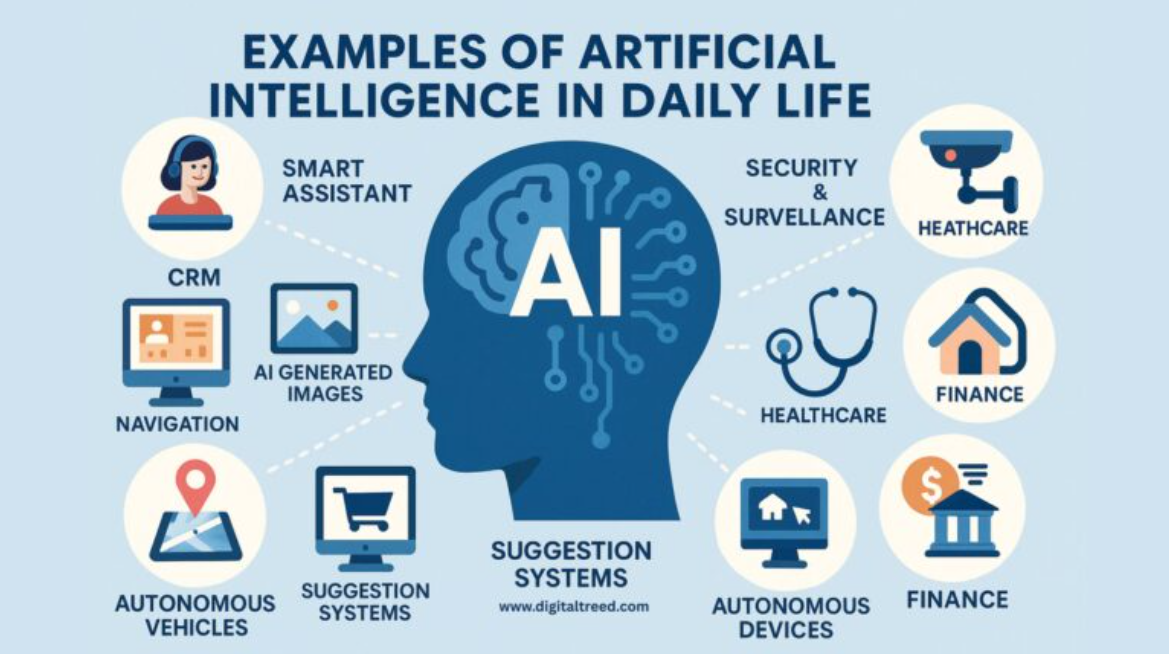
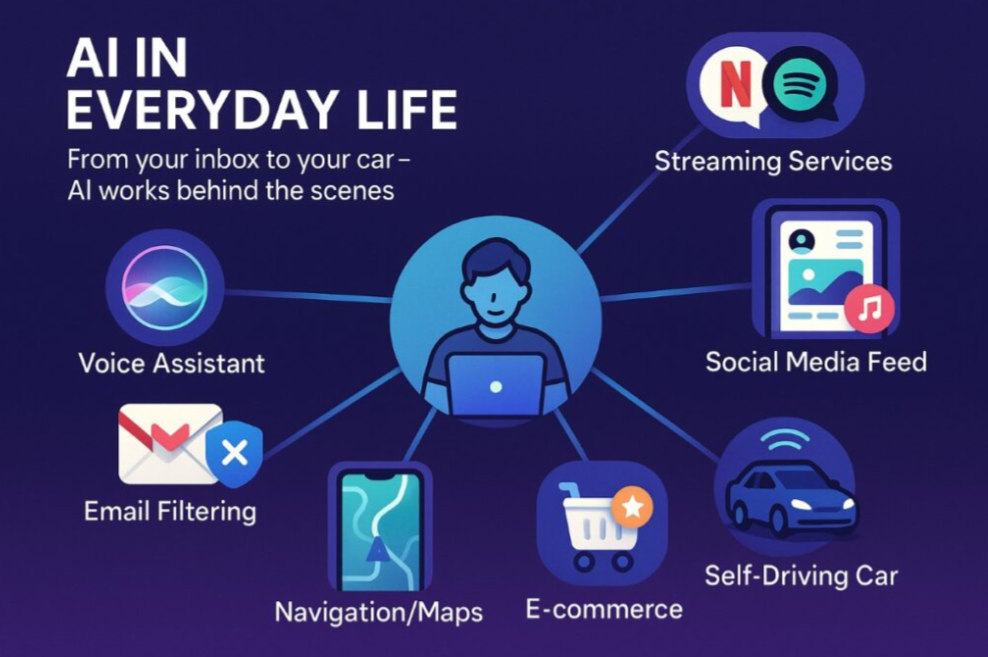
These applications save time, reduce cognitive load, improve safety, and personalize experiences. Adoption is seamless because the AI often operates invisibly in the background.
AI in Business: Driving Efficiency, Innovation, and Growth
Businesses across sectors are leveraging AI for competitive advantage. Key use cases include:
Customer Service and Engagement
AI chatbots and virtual agents provide 24/7 support, handle routine queries, and escalate complex issues. Advanced systems analyze sentiment and personalize interactions. Examples: Sephora’s Virtual Artist for beauty recommendations or banking assistants handling millions of interactions.
Marketing and Sales
Hyper-personalized campaigns and product recommendations.
Lead scoring and predictive analytics to prioritize prospects.
Content generation for emails, ads, and social posts.
Customer segmentation and lifetime value prediction.
Operations and Supply Chain
Predictive maintenance to reduce downtime in manufacturing.
Demand forecasting and inventory optimization.
Logistics routing and warehouse automation with robotics.
Quality control via computer vision.
Data-Driven Decision Making
AI analyzes vast datasets for insights, trend detection, risk assessment, and scenario modeling. Tools generate reports, visualizations, and actionable recommendations far faster than manual analysis.Human Resources and Productivity
Resume screening and candidate matching.
Employee engagement analysis and personalized training recommendations.
Meeting summarization, note-taking, and task automation tools.
AI coding assistants accelerating software development.
Industry-Specific Examples
Healthcare: Assisting in diagnostics (imaging analysis), drug discovery (e.g., protein structure prediction), and personalized treatment plans.
Finance: Real-time fraud detection, algorithmic trading, credit scoring, and compliance monitoring.
Retail: Dynamic pricing, visual search, and supply chain resilience.
Manufacturing: Process optimization and defect detection.
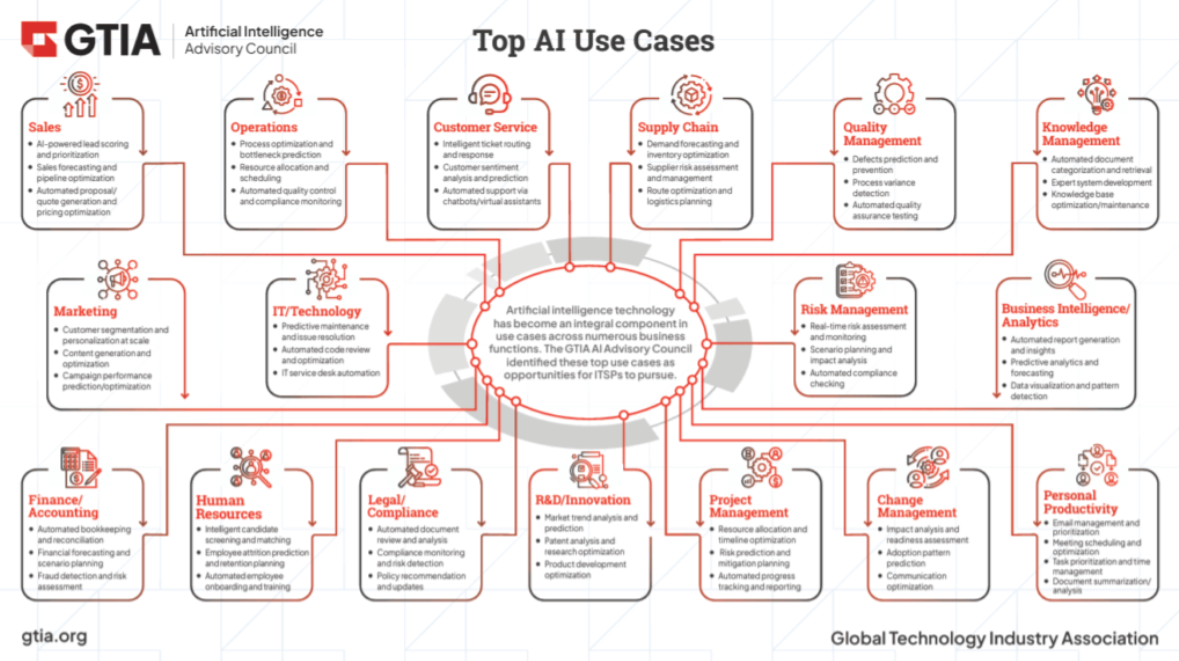
Comprehensive diagram of top AI use cases across business functions including sales, operations, customer service, supply chain, marketing, HR, finance, and more.
By 2026, many organizations are moving beyond pilots to scaled deployments, often combining multiple AI capabilities (e.g., generative AI for content + predictive analytics for targeting). Benefits include cost reduction, revenue growth, improved customer satisfaction, and faster innovation cycles.
Benefits, Challenges, and Ethics
Benefits
- Increased efficiency and productivity.
- Enhanced decision-making with data-driven insights.
- Personalization at scale.
- Accessibility improvements (e.g., real-time translation, assistive technologies).
- Innovation acceleration (new products, scientific discoveries).
Challenges
- Data quality, privacy, and security concerns.
- Bias and fairness issues if training data is unrepresentative.
- Job displacement in certain roles (offset by new opportunities in AI-related fields).
- High implementation costs and need for skilled talent.
- Integration complexities with legacy systems.
- Hallucinations or errors in generative models.
Ethics and Responsible AI
How 123 Tech Can Help You Incorporate AI
Understanding AI is the first step—successfully integrating it into your life or business requires expertise, careful planning, robust implementation, and ongoing support. This is where we come in.
Our software consultancy services provide strategic guidance tailored to your specific needs. We assess your current processes, identify high-impact AI opportunities (from personal productivity tools to enterprise-wide systems), and develop customized roadmaps.
Whether you want to deploy generative AI for content creation, implement predictive analytics for better forecasting, or build intelligent automation, we help translate possibilities into practical plans.
Our testing services ensure AI solutions perform reliably. We conduct rigorous functional, performance, security, and bias testing to validate models, catch edge cases, and confirm they meet quality standards before deployment. This is critical because AI systems can behave unpredictably with new data.
Our innovative Second Eyes Service offers an independent layer of expert review. Just as a second pair of eyes catches errors in writing or code, our specialists provide fresh perspectives on your AI projects—reviewing architectures, outputs, ethical implications, and integration points. This adds confidence, reduces risks, and often uncovers optimizations your primary team might miss.
We support end-to-end journeys: from initial education and proof-of-concept development, through secure deployment and integration with existing systems, to training your team and establishing governance frameworks. Our focus is on practical, ethical, and sustainable adoption that delivers measurable value while mitigating downsides.
Clients across industries have used our services to streamline operations, enhance customer experiences, and unlock new revenue streams with AI—without the common pitfalls of rushed or poorly governed implementations.
Conclusion: The Time to Act Is Now
Artificial intelligence represents one of the most transformative technologies of our era. From narrowing the gap between human intent and machine execution in daily tasks to revolutionizing how businesses operate and innovate, its impact is profound and accelerating. As of 2026, accessible tools make experimentation easier than ever, but thoughtful integration—guided by expertise—maximizes benefits while minimizing risks.
Whether you are exploring AI for personal efficiency (smart assistants, personalized recommendations) or business transformation (automation, analytics, generative capabilities), the opportunities are vast. Success depends on understanding the technology, choosing the right applications, and partnering with experienced professionals for implementation and oversight.
We are here to guide you.
Contact us to discuss how our consultancy, testing, and Second Eyes services can help you harness AI effectively for your unique context. The future is intelligent—let’s build it together, responsibly and successfully.